

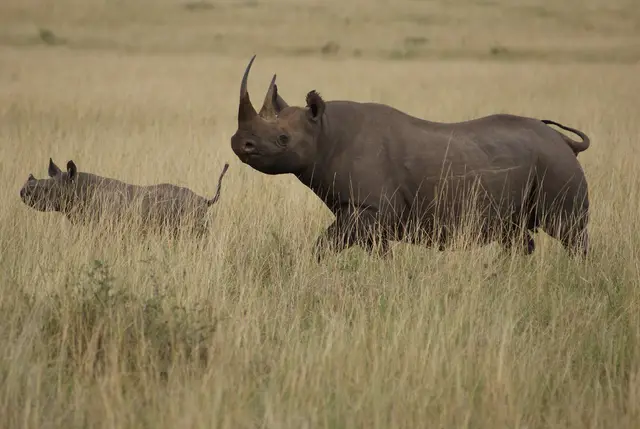
You can track black rhino on foot in Kenya in two genuinely different ways this year, and the price gap between them is bigger than most safari sites let on. At Ol Pejeta Conservancy in Laikipia, a guided foot-tracking add-on runs about KES 9,060 (roughly $70) on top of the standard $110-a-day conservancy fee — so call it $180-200 for the day, done as part of a normal Nanyuki-area itinerary. At Sera Rhino Sanctuary in Samburu, the same basic idea — walking up on a black rhino with an armed ranger — comes wrapped in an all-inclusive package starting around $4,985 per person. Same activity, wildly different trip.
We’d been getting asked which one is “worth it,” and honestly, most of the pages that show up when you search this are written by the lodges selling the expensive option, so they’re not exactly going to point you toward the $70 version. Here’s an honest look at both, based on what’s actually bookable in September 2026.
What “Rhino Tracking on Foot” Actually Means
It’s not a nature walk that happens to pass a rhino. You go out first in a vehicle with rangers using telemetry — most rhinos at both conservancies wear ear-notch IDs or, at Ol Pejeta, VHF collars — to get a fix on an animal’s location. Once you’re close, you get out and approach on foot, staying downwind, moving slowly, and stopping well short of the animal. Guides read fresh tracks and browse marks (a black rhino’s hooked lip leaves a distinctive snap on acacia branches) along the way, so even a slow morning teaches you to see the bush differently.
Both are black rhino, if you’re wondering — Ol Pejeta and Sera are two of only a handful of places in East Africa where this species can be tracked this way, since black rhino are browsers in thicker cover and considerably more skittish than the white rhino you’ll see grazing in open grass at most other parks.
Option 1: Ol Pejeta Conservancy — the One You Can Actually Just Book
Ol Pejeta sits about a 3.5 to 4-hour drive from Nairobi, or a 45-minute flight into Nanyuki followed by a short transfer. That alone makes it the realistic option for most people — you can fold rhino tracking into a broader Laikipia trip without chartering a plane into the bush.
The numbers, as of this month:
- Conservancy entry fee: around USD 110 per non-resident adult, per day
- Rhino tracking activity: approximately KES 9,060 per person (about $70), booked in advance — slots are limited
- Total for the activity day: roughly $180-200 per person, before accommodation
- Bonus: Ol Pejeta is also home to the last two northern white rhinos on Earth, Najin and Fatu, who you can visit separately
Because it’s a day activity rather than a multi-night package, you control the rest of your itinerary and budget. It’s also the more reliable option if you’re short on time — no dependence on a specific lodge’s fixed departure dates.
Option 2: Sera Rhino Sanctuary — Remote, and Priced Like It
Sera, in the Namunyak/Samburu ecosystem in northern Kenya, is a different proposition entirely. It’s the first community-owned and -operated black rhino sanctuary in East Africa, run through the Northern Rangelands Trust conservancy model, and it’s genuinely wilder — the terrain is drier, rockier, and far less visited than Laikipia.
Access is by light aircraft to Kalama or Samburu airstrip, then a scenic road transfer of an hour or more, which is part of why the sole camp offering this experience, Saruni Rhino, prices it as an all-inclusive package rather than a per-activity add-on — think $4,985 per adult sharing for the full stay, plus a conservancy fee of around $175 per adult per day on top. Some operators quote shorter 2-day versions from about $4,500 per person.
What you’re paying for isn’t just the rhino encounter — it’s a genuinely remote, low-density wilderness experience with community ownership at its core, plus the logistics of getting a small number of guests safely in and out of a very rural part of the country. If budget isn’t the deciding factor and you want the trip to feel like an expedition rather than a day trip, Sera delivers something Ol Pejeta, close to the highway, simply can’t replicate.
Quick Comparison
| Ol Pejeta (Laikipia) | Sera (Samburu) | |
|---|---|---|
| Access from Nairobi | 3.5-4 hrs drive or short flight to Nanyuki | Charter flight + road transfer |
| Cost structure | Pay-per-day + activity fee | All-inclusive multi-night package |
| Rough total (per person) | $180-200 for the tracking day | From ~$4,985 (2-3 nights) |
| Booking lead time | Days to weeks | Ideally months ahead — very limited beds |
| Best for | Day-trippers, first safari, tighter budgets | Repeat visitors, remote-wilderness seekers |
So Which One Should You Actually Pick?
If this is your first time in Kenya, or rhino tracking is one activity among several on a broader itinerary, Ol Pejeta is the sensible call — you get the same core experience of walking up on a wild black rhino for a fraction of the cost, and you can combine it with a stop at Sweetwaters or the chimp sanctuary the same day. If you’ve already done the classic Kenya circuit and want something that feels genuinely off the map, with the conservation story of community ownership built into the trip, Sera is worth the splurge — just book well ahead, since beds at Saruni Rhino are limited and fill up fast in the July-to-October dry season.
FAQ
Is rhino tracking on foot safe?
Yes, when done with trained rangers who control the approach distance and always keep an exit route. You’ll be briefed beforehand and told exactly where to stand; guides call off an approach immediately if a rhino shows signs of stress.
Can I see white rhino instead, if black rhino tracking feels too pricey?
Yes — white rhino graze in open areas and are commonly seen on regular game drives at Ol Pejeta, Lake Nakuru National Park, and Nairobi National Park without the extra tracking fee.
Do I need to be fit to do this?
Reasonably so. Walks are usually short (under an hour) and unhurried, but the ground can be uneven and it’s done in daytime heat, so basic mobility and comfort walking off-trail matters more than fitness level.
What’s the best month to go?
The dry season, roughly June through October, gives the clearest tracking conditions and easiest access — vegetation is thinner, which helps both visibility and the rangers’ ability to read fresh tracks. September, right now, sits comfortably in that window.
Is Sera the only place to track black rhino in Samburu?
Within the Samburu ecosystem, yes — Saruni Rhino holds exclusive access to Sera’s tracking program. Elsewhere in Kenya, Ol Pejeta is the main alternative for black rhino specifically.
Planning a wider Laikipia loop? We’ve written about Ol Pejeta Conservancy’s Big Five side in more detail, and if Samburu’s on your list beyond Sera, our guide to Samburu National Reserve covers the reserve itself. Both regions are usually reached via Nanyuki, which is also the jumping-off point for climbing Mount Kenya if you want to stack an extra few days onto the trip.
For official conservation context, the Kenya Wildlife Service tracks the country’s black rhino population and recovery strategy nationally.
By the Twende Kenya Travel Desk
Comments 0
Join the conversation. No account needed.