

By the Twende Kenya Travel Desk
Shimba Hills National Reserve costs USD 50 a day for non-resident adults in 2026 — not the USD 30 or USD 22 you'll see quoted on half the blogs that come up when you search for it. We checked directly against the Kenya Wildlife Service's own park page this week, and the gap between what KWS actually charges and what's floating around online is wide enough to throw off a trip budget. Here's what it really costs, what the sable antelope and Sheldrick Falls are actually like, and how to get there from Diani in under an hour.
What does Shimba Hills National Reserve actually cost in 2026?
KWS runs Shimba Hills, and as of September 2026 the official rates on kws.go.ke are these — not the older figures still being recycled by tour-operator blogs that haven't updated since 2024:
| Category | Rate (per person, per day) |
|---|---|
| Non-resident adult | USD 50 |
| Non-resident child | USD 25 |
| Africa citizen adult | USD 20 |
| Africa citizen child | USD 10 |
| Kenya resident adult | KES 675 |
| Kenya resident child | KES 350 |
| East Africa citizen adult | KES 500 |
| East Africa citizen child | KES 250 |
On top of that there's a separate KWS vehicle fee, which scales with seating capacity the same way it does at every other KWS park — the reserve's page doesn't itemise it, so confirm the exact figure when you book through eCitizen or pay at Kivumoni Gate. Payment at the gate is cashless: M-Pesa or Visa through KWSpay, no cash accepted. Gates run 6am to 6pm unless you've arranged to camp overnight.
Why is Shimba Hills the only place to see a sable antelope in Kenya?
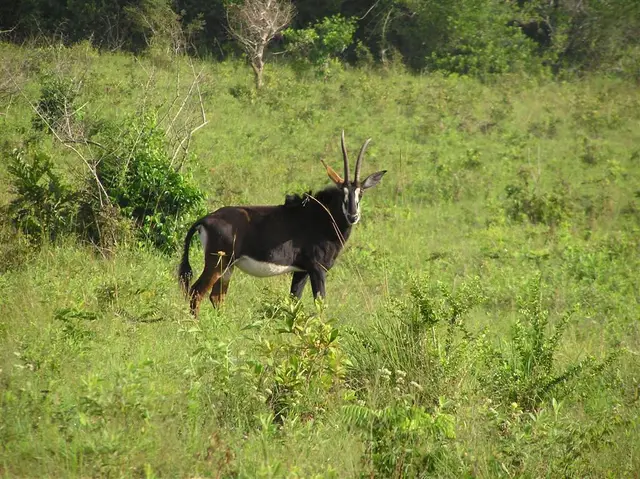
Shimba Hills holds the country's last breeding herd of Roosevelt's sable antelope — the population most sources put at around 100 animals, all inside this one 192.5 km² reserve in Kwale County. They're matriarchal, tightly bonded, and genuinely shy, so a sighting isn't guaranteed on any single game drive. Rangers generally rate early morning as the better window, when herds move through the more open grassland patches before retreating into forest cover as the day heats up. The reserve was first gazetted back in 1903 and formalised as a national reserve in 1968, specifically to protect the sable and the resident forest elephants that still move through the hills as part of a wider coastal corridor.
It's jointly managed by KWS and the Kenya Forest Service, which is part of why Shimba Hills doesn't feel like a typical savannah park — it's Kenya's largest surviving stretch of coastal rainforest, all rolling hills and misty viewpoints rather than flat bush.
How hard is the hike to Sheldrick Falls?
Sheldrick Falls is a 60-metre waterfall reached on a guided trail through coastal forest — figure 30 to 45 minutes each way, past fig trees and clearings thick with butterflies. It's rated manageable for kids from around age eight, but KWS requires a ranger escort for every group, both for navigation and because you're walking through elephant habitat. Bring proper shoes; the path isn't technical but it isn't flat pavement either, and after rain it gets slick.
How do you get to Shimba Hills from Diani or Mombasa?
From Diani, it's about 31km to the main gate via the Likoni–Ukunda road, branching off at Kombani junction — reckon on 45 to 60 minutes depending on traffic through Ukunda. From Mombasa town it's roughly 37km the same way, with the Kombani turnoff adding another 19km to the gate. If you're flying in, Ukunda airstrip sits about 36km from the park, and there's also the SGR option from Nairobi's Syokimau terminus to Miritini in Mombasa, followed by a road transfer. Realistically, most visitors do this as a half-day or full-day trip out of Diani or Mombasa rather than staying inside the reserve, though KWS does run self-catering options if you want to.
When is the best time to visit — is September good?
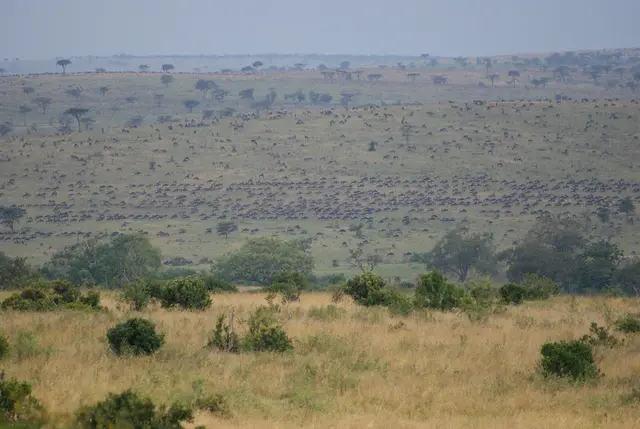
September sits inside Kenya's long dry season, which matters more here than at most parks because the trail to Sheldrick Falls turns genuinely muddy during the April–June long rains and gets slippery again in the shorter October–December rains. Dry-season footing makes both the falls hike and general game viewing easier, and the coastal forest is noticeably cooler than the beach a few kilometres away — a reasonable excuse to get out of the Diani heat for an afternoon. If your main goal is the sable antelope specifically, there's no strong seasonal pattern reported beyond "early morning, any month" — this isn't a migration species with a defined window the way wildebeest are over in the Mara.
Where can you stay?
Inside the reserve, KWS offers the self-catering Sable Bandas plus public campsites at Professional and Makadara, alongside the Mbugani Homes option — all bookable directly through KWS rather than third-party platforms, which keeps costs down if you're not fussy about extras. Most visitors, though, base themselves on the coast in Diani or Mombasa and treat Shimba Hills as a day excursion, since the drive is short enough that it doesn't really cost you a beach day.
FAQ
How much does it cost to enter Shimba Hills National Reserve in 2026?
Non-resident adults pay USD 50/day, non-resident children USD 25/day, per KWS's official 2026 rates — plus a separate vehicle fee. Kenya residents pay KES 675 (adult) and KES 350 (child).
Can you guarantee seeing the sable antelope?
No. The herd is small, shy, and moves through dense forest cover much of the day. Early morning game drives with a ranger who knows recent movement patterns give you the best odds, but it isn't a sure thing.
Do you need a guide for the Sheldrick Falls hike?
Yes — KWS requires a ranger escort on every hike to the falls, both for the walk itself and because the trail passes through active elephant territory.
Is Shimba Hills worth a day trip from Diani?
Yes. At 45 to 60 minutes each way, it's an easy half-day or full-day add-on to a coast holiday, and it's a genuinely different landscape — misty forest hills rather than beach or savannah.
What's the best month to visit Shimba Hills?
Anywhere in the dry season works, and September specifically means firmer footing on the falls trail and cooler forest air than you'll find on the coast that same week.
For general trip logistics, a vetted local guide can also arrange the Shimba Hills–Sheldrick Falls combination as part of a coast itinerary, and if forest elephants are the draw, our piece on Tsavo's red elephants covers a very different — and much bigger — elephant experience an hour or two further inland.

Comments 0
Join the conversation. No account needed.