

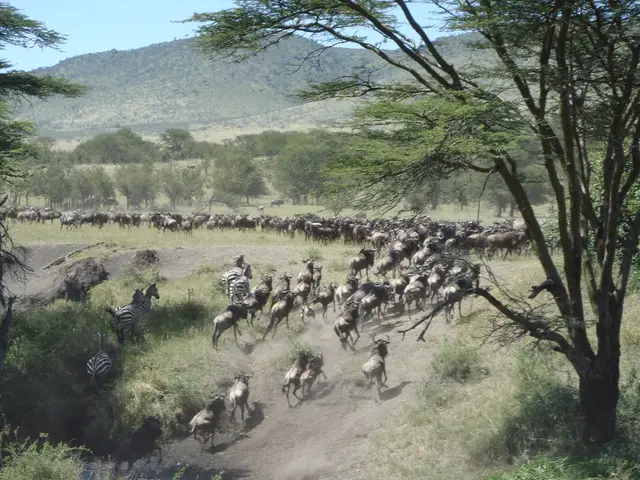
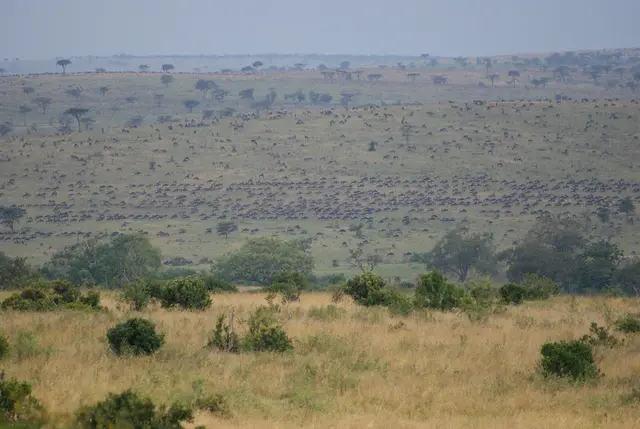
The wildebeest have reached the Mara, and the timing couldn't be better if you're weighing a safari this month. The first crossings at the Mara River's Crossing Point No. 6 were spotted back in June, small, cautious groups testing the current before the main herds committed. By late July, larger numbers were gathering at the Sand River, and on August 2, a lion pride was seen hunting wildebeest inside the Mara ecosystem, a sign the predators have already positioned themselves for what's coming.
What's coming, according to the safari operators who track this every year, is the real spectacle: the dramatic, chaotic Mara River crossings, thousands of wildebeest launching off steep banks into crocodile-filled water. Most forecasts point to mid-August through late September as the strongest window this year, with August 10 to September 20 flagged as the likely peak. Nobody can tell you the exact day it'll happen, the herds don't work to a schedule, but if you're planning around it, this month and next is genuinely the time.
Where to actually stay for it
If a river crossing is the goal, proximity to the Mara Triangle and the conservancies around Crossing Points 5 through 10 matters more than which end of the reserve looks nicest in photos. Camps and lodges closer to those points give you a shorter, calmer drive when a sighting is called in, rather than a 40-minute race across bumpy tracks while the moment passes. Masai Mara Serena Lodge sits high on a hill within the Mara Triangle itself, with the reserve's crossing points within realistic morning-drive range. Sand River Mara Camp, tucked in the reserve's southeastern corner, puts you closer to the Sand River gatherings that tend to precede the bigger Mara River action. Both are worth calling ahead on for August and September availability, since migration season books out fast.
A few things worth knowing before you go
Crossings can happen at any hour, but guides generally agree mid-morning sightings are more common, once the heat builds and the herds get restless standing at the water's edge. Bring a proper zoom lens if you're shooting photos; the action happens fast and from a fixed viewing distance, not up close. And temper expectations a little: some visitors spend three or four days in the Mara without seeing a full-scale crossing, because the wildebeest genuinely don't move on anyone's timetable. What you're near-guaranteed instead is everything around the crossing, the gathering herds, the tension of animals testing the water, and predators waiting it out along the banks, which is its own kind of unforgettable even on the days the big jump doesn't happen.
Comments 0
Join the conversation. No account needed.